
If severe or profound hearing loss has begun to close the world around you or your child, cochlear implant surgery in Gurgaon at Gurgaon ENT Clinic offers a proven way back to sound. A cochlear implant is a small electronic device that bypasses the damaged part of the inner ear and stimulates the auditory nerve directly, so the brain receives sound signals it can no longer pick up on its own. Led by Dr. Ravinder Gera, one of the most experienced cochlear implant surgeons in Gurgaon and Delhi NCR, our team guides you from the first hearing assessment through surgery, switch-on and long-term rehabilitation.
This page is for adults whose hearing aids no longer help them follow conversations, and for parents of children with congenital or early hearing loss who want to protect speech and language development. If you can hear sound but can no longer understand words clearly, you may be a candidate.
What is a cochlear implant and how does it work?
Many people confuse a cochlear implant with a powerful hearing aid. They are not the same. A hearing aid simply amplifies sound. A cochlear implant works differently: it bypasses the damaged parts of the ear and sends signals straight to the auditory nerve, which then carries them to the brain to be understood as sound. The system has an internal part placed during surgery and an external speech processor worn behind the ear. This is why implants help people whose hearing loss is too severe for amplification to make speech clear again.
Who is a candidate for cochlear implant surgery?
Cochlear implants are designed for people with severe to profound sensorineural hearing loss who get limited benefit from hearing aids. Candidacy is decided after a full evaluation, but the common threads are:
- Severe or profound hearing loss in one or both ears.
- Little or no improvement in speech understanding with well-fitted hearing aids.
- Children born with hearing loss, where earlier implantation supports speech and language development.
- Adults who lost hearing later in life and want to reconnect with conversation, work and family.
- Seniors who find high-power hearing aids are no longer enough.
If you are weighing your options, our guide on why more people are choosing cochlear implant surgery in Gurgaon explains how the decision usually unfolds.
What technology and brands do you use?
Gurgaon ENT Clinic uses the latest and most reliable cochlear implant technology from globally recognised brands, including Cochlear Ltd., Advanced Bionics and MED-EL. These devices are built for improved sound quality and speech recognition. Modern implants are increasingly software-driven, so mapping can be fine-tuned over time and, on some systems, upgraded through updates. Your surgeon and audiologist help you choose the device that fits your hearing profile, lifestyle and budget rather than a one-size-fits-all package.
How is the evaluation and surgery done?
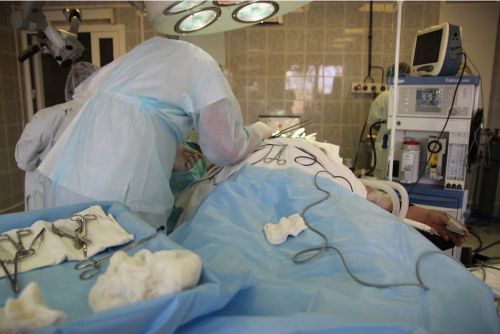
The pathway starts with a detailed assessment: hearing tests, and imaging such as CT or MRI to study the anatomy of the inner ear. This tells us whether an implant is suitable and which ear to treat. The surgery itself is performed under general anaesthesia and, in many cases, patients are discharged within a short stay. The internal device is placed and the incision closed; the external processor is fitted only later, once initial healing has taken place.
What does recovery and switch-on look like?
Recovery happens in stages. The surgical wound heals first, and the implant is switched on a few weeks later once healing allows. Switch-on is the beginning, not the end. The brain needs time to learn to interpret the new signals, supported by mapping sessions and auditory-verbal therapy. Cochlear implantation works best treated as a continuum, not a single event.
| Stage | What happens |
|---|---|
| Surgery day | Procedure under general anaesthesia; short hospital stay for most patients. |
| First few weeks | Wound heals; rest and routine wound care; no external processor yet. |
| Switch-on | External processor fitted and activated; first structured sounds. |
| Following months | Regular mapping adjustments and auditory-verbal therapy to build clarity. |
For a fuller walkthrough, read our step-by-step guide covering requirement, procedure, recovery and cost.
What does cochlear implant surgery cost in Gurgaon?
Our published figure: Gurgaon ENT Clinic has not published a price for cochlear implant surgery, and we would rather say so plainly than put up a number that turns out to be wrong for your case. An honest figure needs an assessment first, because the type of implant chosen, the pre-operative evaluation and the rehabilitation that follows all change the plan. Many families also explore insurance and government assistance to help with funding. Call +91-9810340495 or book a consultation, and you will be given a written estimate that itemises consultation, diagnostics, the procedure itself and follow-up care.
Why choose Dr. Ravinder Gera and Gurgaon ENT Clinic?
Dr. Ravinder Gera is an ENT and Otolaryngology surgeon who specialises in cochlear implant surgery and microscopic ear surgeries. He brings 27+ years of experience and more than 18,000 surgeries, and was awarded Gold Medalist for two consecutive years in M.B.B.S. He is currently Principal Director and Head of the ENT Department at Max Hospital, Gurgaon, and is a member of the Association of Otolaryngologists of India. Our clinic provides comprehensive support under one roof, from pre-operative assessment through to post-operative rehabilitation, which is why it remains one of the most visited ENT clinics in Gurgaon. If you are still comparing procedures, our page on microear surgery explains when a reconstructive ear operation may suit you instead.
Frequently asked questions
What is the cost of cochlear implant surgery in Gurgaon?
Gurgaon ENT Clinic has not published a price for cochlear implant surgery. The figure depends mainly on the type of implant selected, and it also reflects the device, evaluation, hospital care and follow-up rehabilitation, not just the operation. Because every case is different, the most accurate figure comes after an assessment. You are welcome to share your medical reports with our team for a personalised estimate.
What is the best age for a cochlear implant in a child?
For children born with hearing loss, earlier implantation generally supports better speech and language development, because the brain learns to process sound during the natural window for language. The exact timing depends on the diagnosis, the degree of hearing loss and the child's overall health. A thorough evaluation with hearing tests and imaging helps decide the right time. Our team guides parents through each step of that decision.
Can adults with hearing loss get cochlear implants?
Yes. Adults who developed severe or profound hearing loss later in life are often excellent candidates, especially when hearing aids no longer make speech clear. Many adults consider an implant not because they hear nothing, but because they can hear sound yet cannot understand words. If conversations need constant repetition and group settings feel exhausting, an assessment can tell you whether an implant would help.
How long after surgery is the implant switched on?
The implant is usually switched on a few weeks after surgery, once the surgical site has healed enough to fit the external processor. Switch-on is the start of the hearing journey rather than the finish. From there, mapping sessions fine-tune the device and auditory-verbal therapy helps the brain learn to interpret the new signals into clear, understandable sound.
Is cochlear implant surgery covered by insurance or government schemes?
Cover varies by policy and by scheme, and it is worth checking your specific plan. Many families combine insurance with available government assistance to help fund the device and surgery. Our team can help you understand what documentation is usually needed and point you toward the right questions to ask your insurer, so the financial side is clearer before you commit to a date.
Cochlear implant versus hearing aid, which is right for me?
A hearing aid amplifies sound and suits mild to moderate hearing loss. A cochlear implant bypasses the damaged inner ear and stimulates the auditory nerve directly, which helps when hearing loss is too severe for amplification to make speech clear. If your hearing aids are turned up but words still blur, that plateau is often the signal to have an implant evaluation.
Is cochlear implant surgery painful or risky?
The procedure is performed under general anaesthesia, so you feel nothing during surgery, and most patients go home after a short stay. As with any operation there are risks, which your surgeon will explain clearly during consultation. In experienced hands the surgery is well established and routinely performed. Following your surgeon's wound-care and follow-up advice keeps recovery smooth.
How do I book a consultation for cochlear implant surgery?
You can book a consultation with Dr. Ravinder Gera directly through this website or by calling the clinic. Bringing recent hearing tests and any imaging helps us assess candidacy faster and give you a clearer plan and cost estimate. Our guide on how to get the best cochlear implant surgery in Gurgaon explains what to prepare before your visit.