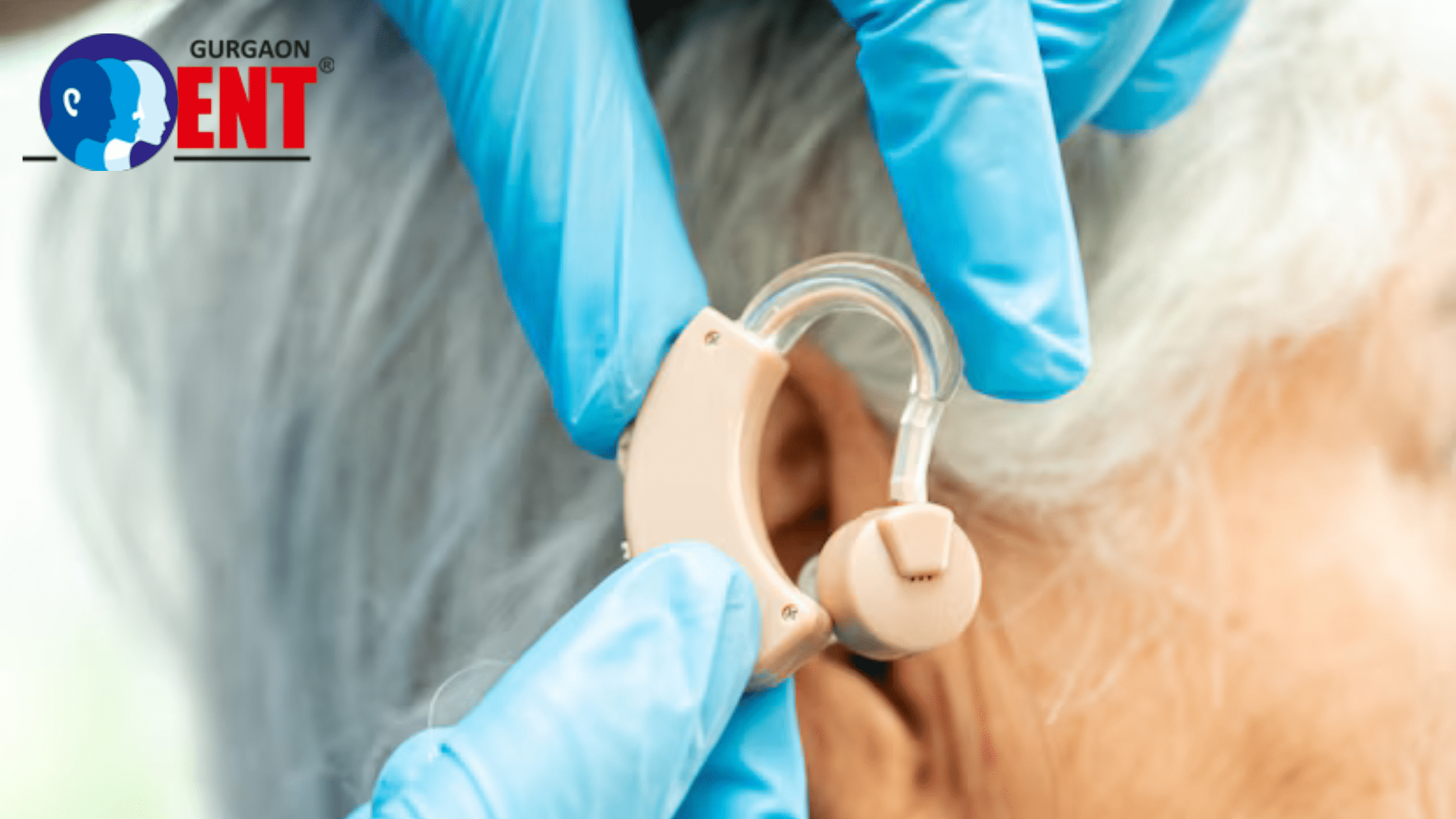
Most people do not start this search from a place of curiosity. It usually follows months—sometimes years—of partial hearing: voices present, words unclear. Hearing aids may still add volume, yet meaning slips. At that point, the question shifts from “What device?” to “Where will this actually work?”
Place, process, and follow-through matter more than brochures suggest.
The First Decisions Happen Before Surgery Is Even Scheduled
Cochlear implantation is less a single event and more a sequence that begins with careful measurement. Threshold testing, speech recognition scores, and imaging are not administrative steps. They establish what improvement is realistic and where the limits may sit.
Clinicians who take time to analyze and document the patient history properly, which involves critical care, tend to reduce the hearing problem more. This keeping record is an important prt for future reference for the patient and an archival document of how a patient’s inconsistent speech and auditory nerves can be cured or solved. Rushed evaluations often produce neat reports and uneven expectations.
A simple indicator of seriousness is how thoroughly the baseline is drawn.
A Working System Beats a Single Department
After activation, sound does not arrive as fluent hearing. Programming sessions—where the incoming signal is shaped—decide how usable that sound becomes day to day. Auditory training then helps the brain attach meaning to what it receives.
When surgery, audiology, and rehabilitation operate as one pathway, adjustments happen in response to real listening experience rather than a fixed calendar. Missed details are fewer. Progress, while gradual, tends to hold.
Centres that treat implantation as a continuing process usually see steadier outcomes than those that treat it as a one-day milestone.
Technical Skill Still Carries Consequences
Placing the electrode array inside the cochlea is delicate work. Preserving existing structures, when feasible, can influence long-term performance. Experience across varied inner ear anatomy reduces surprises.
Even so, operating-room precision is only part of the picture. If mapping is irregular or therapy access is limited, gains plateau. When considering any centre described as the Best Cochlear Implant Surgery Clinic in Gurgaon, it helps to read the follow-up plan closely—who handles programming, how often reviews occur, and how long the clinic remains involved.
Device Choice Should Be Reasoned, Not Habitual
Implant systems differ in processor design, electrode configuration, and processing strategy. Those differences matter only in context.
A credible team explains why a particular system fits a specific patient—age, anatomy, communication goals—rather than defaulting to a single brand. Clear reasoning early reduces later friction, especially when first impressions of sound are unfamiliar.
Selection works best as a clinical match, not a catalogue pick.
Progress Is Seen in Use, Not Just Numbers
Activation is a starting point. Early sound may feel mechanical. Speech understanding typically improves with repeated exposure and iterative adjustments.
Clinics that track change through speech perception, listening effort, and everyday communication—alongside standard thresholds—tend to guide patients more accurately. Regular reviews allow settings to evolve as perception adapts, which is where durable benefit usually appears.
Financial Detail Belongs Up Front
The full pathway includes more than device and surgery. Programming sessions, therapy, maintenance, and periodic upgrades all carry cost. Discussing these elements early prevents decisions based on partial figures.
Insurance cover and public schemes may apply where criteria are met. International guidance continues to describe cochlear implantation as a cost-effective intervention for appropriate candidates
https://www.who.int/news-room/fact-sheets/detail/deafness-and-hearing-loss
Small Signals That Often Predict the Experience
Reputation is visible; process is quieter. A few practical observations help:
- Is the initial evaluation detailed enough to revisit months later?
- Are limitations discussed as plainly as benefits?
- How easy is it to schedule mapping and therapy after activation?
- Do the same clinicians review progress over time?
Consistency in these areas often translates into steadier communication outcomes.
Closing Perspective
Selecting the Best Cochlear Implant Surgery Clinic in Gurgaon is less about securing advanced hardware and more about choosing a setting that treats hearing restoration as an extended, coordinated effort.
The implant provides access to sound. What follows—calibration, training, review—determines whether that access becomes everyday understanding. When assessment is deliberate, and follow-up sustained, improvement tends to be quiet, gradual, and reliable—and it lasts.
Recent Post
-

Emergency Ear Pressure: Dealing with Flight Ear at the ENT Doctor Near Me in Gurgaon
August 12, 2026
-
Pediatric “Smart Sync”: How a Cochlear Implant Surgeon in Gurgaon uses automatic processor settings for school-aged kids.
August 4, 2026
-

When Ear Discharge Means You Need an ENT Specialist in Gurgaon
July 27, 2026