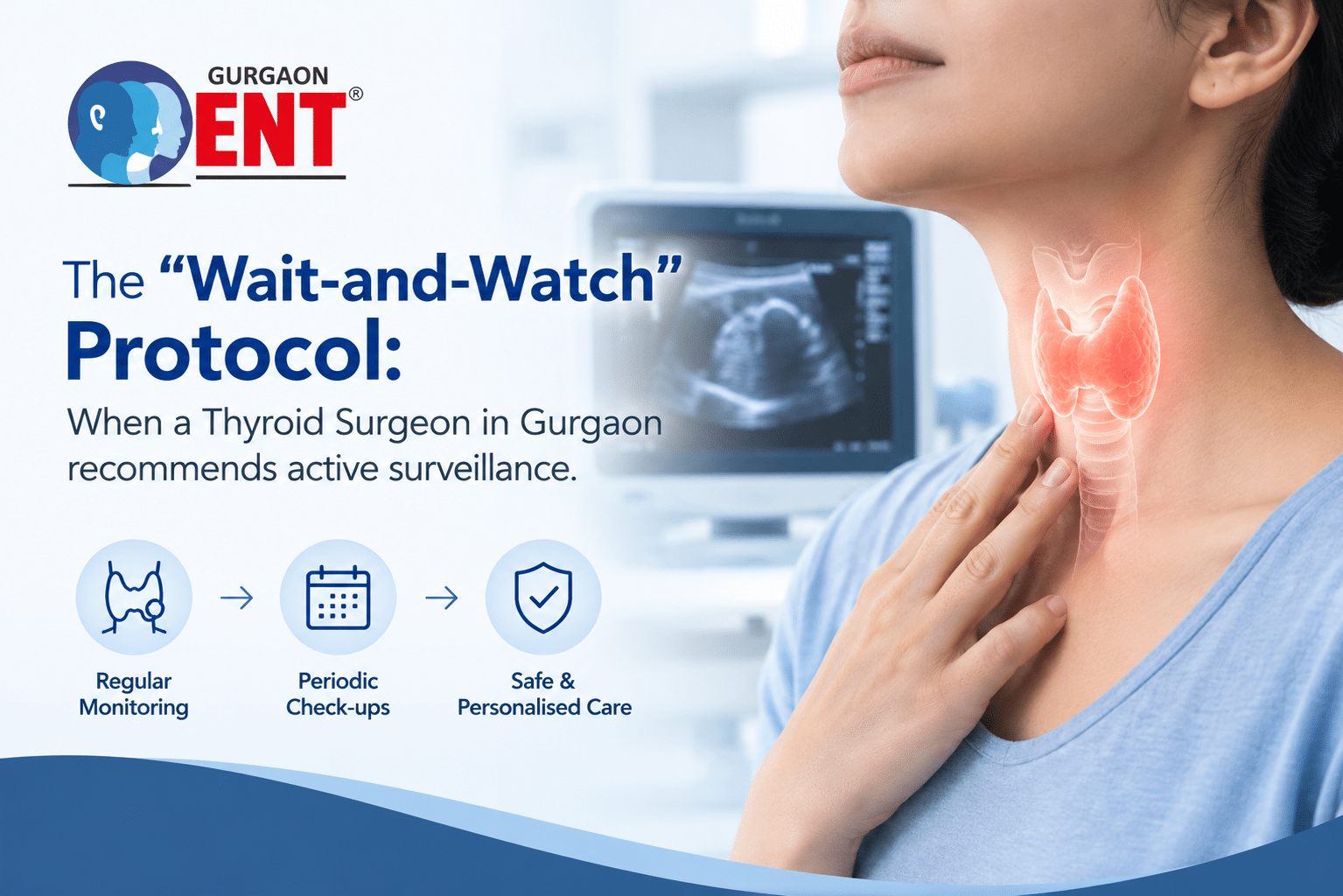
Someone gets a neck ultrasound for something unrelated — a routine annual check-up, maybe a scan ordered for something else entirely — and the report mentions a nodule on the thyroid, usually with a size in millimetres attached and a phrase like “indeterminate” or “TIRADS 4” sitting next to it. Most people skim past every other line and land on the one word that actually registers. Surgery. A scar. Tablets, every morning, for the rest of their life.
Not an irrational reaction, that. Thyroid nodules also happen to be extremely common — a large share of adults have one once you scan closely enough, most never causing so much as a symptom. The gap between “a nodule was found” and “surgery is needed” tends to be a lot wider than it feels standing in the radiology waiting room.
Here’s the part that surprises a lot of patients: for a defined, fairly specific slice of these cases, the right next step isn’t an operation. It’s watching. On a schedule. With actual criteria attached, not a shrug and a “let’s see.”
This idea isn’t new to cancer care as a whole — active surveillance, or the “wait-and-watch” protocol depending who’s explaining it. Prostate cancer surveillance has existed for well over a decade now. Thyroid cancer guidance simply caught up to the same logic more recently. As a Thyroid Surgeon in Gurgaon, the shift is practical and fairly visible in the clinic day to day: patients who a few years back would have been booked for surgery within weeks of diagnosis are now, for a defined subset of cases, offered a monitoring plan instead. The data got strong enough, finally, for major guideline bodies to put it in writing rather than leave it to individual surgeons’ discretion.
Why This Conversation Is Happening Now
For a long time the default in thyroid care leaned toward removing anything that looked even slightly suspicious on a scan. Some of that was genuinely technical. Older ultrasound equipment, paired with less standardised reporting, made it harder to tell a slow-growing, low-risk cancer apart from something that actually needed prompt attention — the two could look frustratingly similar on a fuzzy image read by different radiologists in different ways. Structured reporting systems like TI-RADS changed this over the last decade or so. Nodules now get scored against defined features — margin irregularity, internal composition, calcification pattern — instead of a radiologist’s general impression, which makes risk stratification considerably more consistent from one scan to the next, and from one hospital to another.
The American Thyroid Association updated its management guidelines for differentiated thyroid cancer in 2025, and one of the more significant shifts was formal recognition of active surveillance as an appropriate option for small, low-risk papillary thyroid cancers — not just an experimental alternative some centres were quietly trying out. Under the updated framework, surgery is no longer treated as mandatory for cancers under 10mm when they meet a specific set of conditions: the nodule is a single lesion, sits away from the thyroid capsule, trachea, and isthmus, shows no lymph node involvement, and stays stable across repeated high-quality ultrasound scans performed by an experienced radiologist.
Most patients fixate on the size of the nodule at diagnosis. That number matters less than they think. Stability, confirmed across more than one scan, is really the backbone of the whole approach. A 9mm nodule that’s grown 2mm over eighteen months of monitoring paints a more reassuring picture than an 8mm nodule discovered alongside a slightly irregular margin on a single scan — smaller on paper, but with nothing to compare it against yet. Size without a growth trend behind it tells you comparatively little.
What “Active Surveillance” Actually Involves
Fair question, and one we hear a lot: does watching a nodule just mean doing nothing? Not really. There’s a structure to it — this isn’t a wait-and-hope approach dressed up in medical language.
At Gurgaon ENT Clinic, when a patient is a genuine candidate for surveillance over surgery, the plan usually starts with periodic neck ultrasounds — every six to twelve months at first, spacing out once a pattern of stability shows up across a few scans. Each new scan gets compared directly against the earlier ones, checking for growth, any change in shape or margins, new lymph node involvement nearby. Thyroid function tests sometimes run alongside the imaging too, though blood markers like thyroglobulin don’t typically feature in cancer surveillance the way they do in post-surgical follow-up.
Patients also get walked through exactly what would flip the plan. Growth of roughly three millimetres or more on ultrasound. A biopsy-confirmed lymph node showing up. Spread beyond the thyroid, or posterior growth toward the trachea. Any of these are reasonable grounds to move from surveillance to surgery. Personal factors count too, separate from the biology entirely — someone who finds ongoing monitoring genuinely hard to live with, or who’s likely to miss follow-ups, may be better served by surgery from the outset even if they’d technically qualify for watching instead.
Who Is Actually a Good Candidate
In our experience, the harder judgment call isn’t usually the biopsy result. It’s the conversation that follows it, once a patient technically qualifies for either path.
Good candidates generally have a small papillary microcarcinoma, usually under a centimetre, found incidentally rather than through a lump someone actually felt. The nodule sits away from critical structures — not pressing against the trachea, not right up against the outer capsule where spread happens more easily. Biopsy results read as reassuring rather than borderline. And there’s a realistic chance the person will keep coming back for monitoring over years, not just the first two follow-ups before life gets in the way.
Certain groups get steered away from surveillance and toward more immediate treatment as a rule. Younger patients — children, very young adults especially — tend to carry more aggressive disease biology, so surveillance gets approached with real caution there. A nodule with aggressive features under the microscope, or signs the cancer’s already extended beyond the thyroid or invaded nearby nerves, isn’t a candidate at all; the guidelines are unambiguous that surveillance stops being appropriate once a tumour behaves that way. Radiation exposure to the neck in the past, or a family history pointing to a genetic thyroid cancer syndrome, tends to push the recommendation back toward surgery as well.
There’s a category that doesn’t get discussed enough, though — the patient who qualifies on paper but isn’t a realistic fit once you factor in how they actually live. Surveillance only works if someone shows up for scans on schedule, year after year, without gaps. Someone who travels for work for months at a stretch, or who admits outright that they’ll spend every day between appointments anxious regardless of what the scans show, is often better served by surgery. Not because the biology demands it — because the monitoring plan only holds up if it’s actually followed. That’s a conversation about the person sitting in front of us, not the tumour, and it’s not one any guideline can fully script.
Why This Isn’t the Same as Ignoring It
Worth being direct about one thing here: active surveillance isn’t the same as doing nothing and hoping the report was wrong. The clinical weight behind the decision matches surgery step for step. What differs is which risk gets judged larger for that particular patient — not whether the risk is being taken seriously at all.
There’s longitudinal data behind all this, not just a theoretical case someone’s making. Several surveillance cohorts — tracked for well over a decade in some cases, mostly out of Japan and South Korea, where the practice started earliest — have followed tumour growth patterns in patients under active monitoring. Published figures generally put progression to a point requiring surgery under five percent of cases over the surveillance period, though the exact number shifts depending on the cohort and how “progression” gets defined study to study. Even with that variation, it’s a fairly different picture from what most patients assume the second “cancer” shows up on a report.
There’s also a real trade-off in play here, and it’s worth stating plainly rather than glossing over. Thyroid surgery, even when it goes well, carries risks that shouldn’t be waved away — injury to the nerves controlling the voice, disruption to the parathyroid glands that regulate calcium, permanent dependence on hormone replacement if the whole gland comes out. For a nodule that may never grow or cause a problem across someone’s entire lifetime, avoiding those risks through careful monitoring can be the better clinical call. Not a lesser one, a better one.
What This Looks Like in Practice at the Clinic
When a patient comes in with a nodule found on imaging, the process at Gurgaon ENT Clinic starts the same way no matter which direction things eventually go. A detailed neck ultrasound gets done first, looking at size, margins, internal characteristics, nearby lymph nodes. If the nodule’s features raise enough concern, a fine-needle aspiration biopsy follows — surgery-or-surveillance decisions never get made on how a nodule looks on imaging alone.
Once results are in, the conversation with the patient becomes less about “cancer or not” and more about which of three paths fits best: active surveillance, a minimally invasive option like radiofrequency ablation where suitable, or surgery. Each path is explained with its actual trade-offs, not a simplified version meant to steer the patient toward whichever option is easier to schedule. This kind of shared decision-making is now written directly into how thyroid cancer guidelines are structured internationally, and for a fairly practical reason: patients who understand and agree with a plan tend to follow through on it, whereas patients who feel a decision was made at them tend to skip appointments or seek a second, third, and fourth opinion looking for someone to simply tell them what to do.
A Few Questions Patients Often Ask
Does choosing surveillance mean I’m avoiding treatment I actually need? No, not when the criteria genuinely fit. It’s built around specific, defined conditions for a reason, and it comes with the same level of structured medical attention as any other treatment plan — just pointed differently.
Can I switch to surgery later if I change my mind, even without a medical trigger? Usually, yes. It isn’t a one-way door. Patient preference sits right alongside growth or new lymph node involvement as a recognised reason to move toward surgery.
How often will I actually need scans? Depends on the case, but a common starting rhythm is an ultrasound every six months for the first year or two, spacing out to annual once stability holds up across several scans in a row.
Is active surveillance only for cancer, or does it apply to benign nodules too? Both, though the protocols aren’t identical. Benign nodules get managed with periodic monitoring quite often as well, particularly when there are no symptoms and biopsy hasn’t flagged anything concerning.
The Bigger Picture
The change in thyroid care over the past year isn’t really about a new treatment getting invented. It’s a treatment that already existed — watching, carefully, on a schedule — finally making its way into the guidelines that shape what doctors are willing to recommend without it looking like they’re cutting corners. For the right patient that shift means skipping a neck scar, skipping a lifetime of hormone tablets, skipping a small but real surgical risk, for a nodule the data suggests will probably never cause a problem across their lifetime.
It only holds up, though, when the initial evaluation is thorough and the follow-up actually happens instead of getting skipped once life gets busy. A nodule wrongly assumed low-risk at the start, or one monitored with scans that never get properly compared against the earlier ones, undoes the entire point of the exercise. Surveillance is only as good as the discipline behind it — nothing more, nothing less.
If you’ve recently been told you have a thyroid nodule and aren’t sure what happens next, that uncertainty is normal, and it’s worth having it properly worked through rather than guessed at. As a Thyroid Surgeon in Gurgaon, Dr. Ravinder Gera brings over 20 years of clinical experience to exactly this kind of case — MBBS, MS (ENT), and DNB from Maulana Azad Medical College, New Delhi, and a member of the Association of Otolaryngologists of India. He evaluates thyroid nodule cases at Gurgaon ENT Clinic with an individualised approach, weighing surveillance and surgery on their actual merits for each patient rather than defaulting to one over the other.
Recent Post
-
The “Wait-and-Watch” Protocol: When a Thyroid Surgeon in Gurgaon recommends active surveillance.
September 16, 2026
-
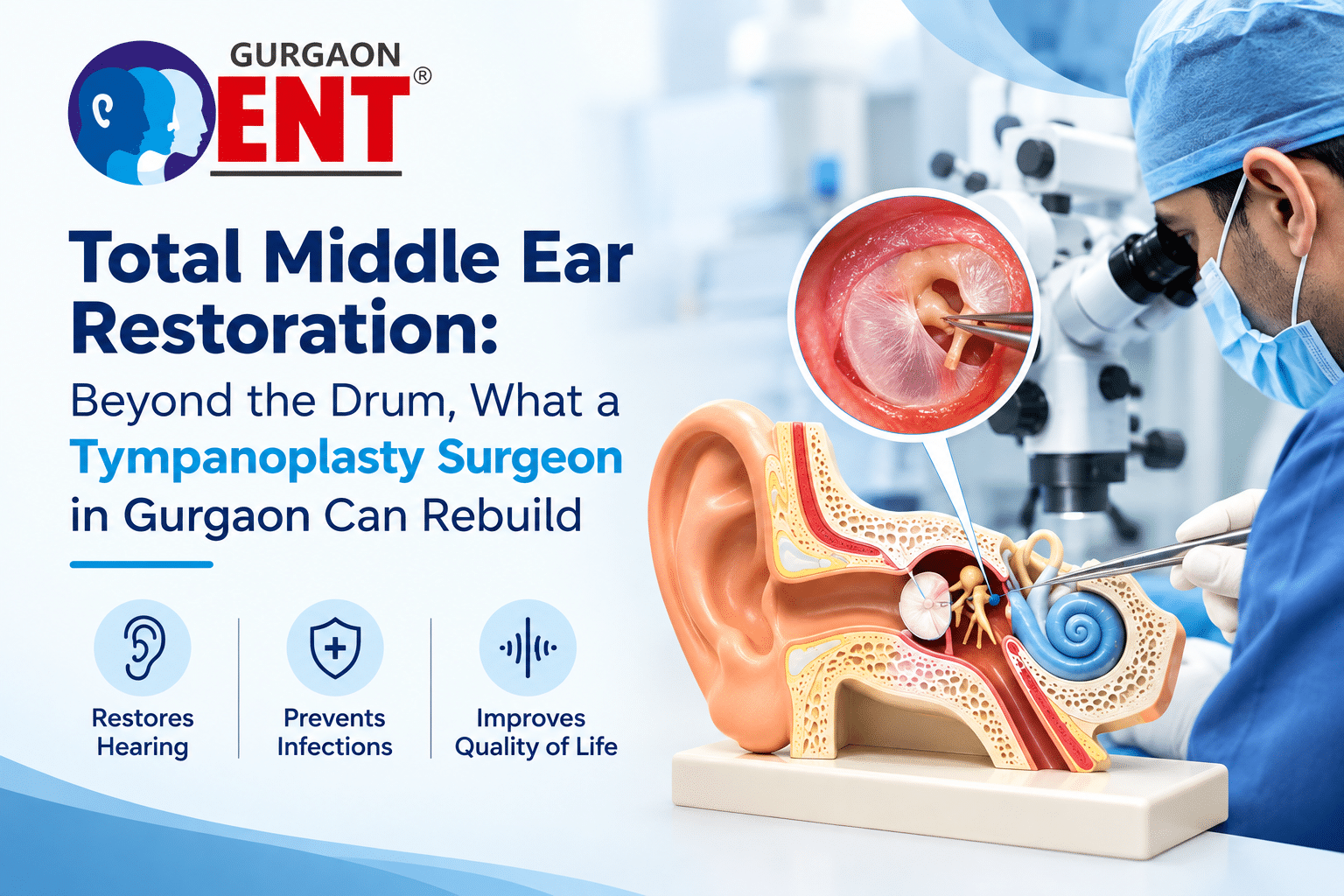
Total Middle Ear Restoration: Beyond the Drum, What a Tympanoplasty Surgeon in Gurgaon Can Rebuild
September 9, 2026
-
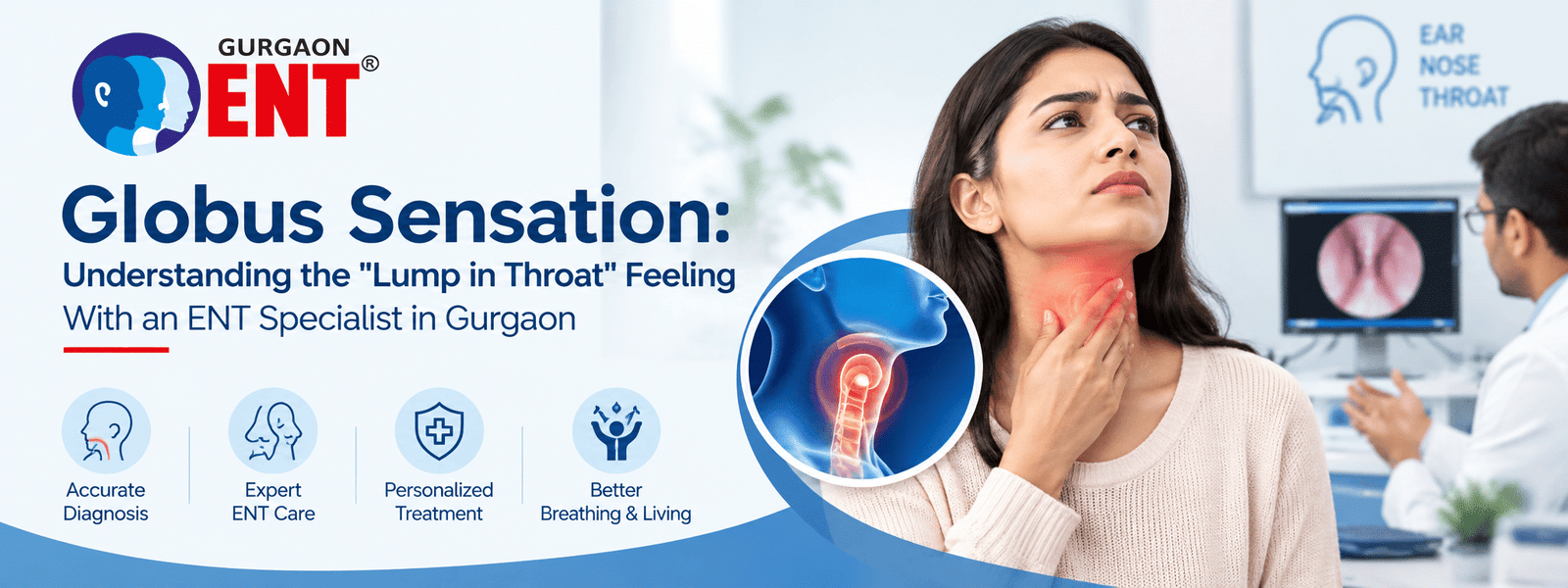
Globus Sensation: Understanding the “Lump in Throat” Feeling With an ENT Specialist in Gurgaon
September 7, 2026