The Firmware Revolution: How a Cochlear Implant Surgeon in Gurgaon now offers “upgradeable” implants that get better with software updates.
I’ve been meaning to write this down for months, but every time I sat to type, some patient would walk in with a worried face and the whole thing got pushed. Maybe that’s fitting. Because what I want to tell you isn’t a polished idea. It’s a messy, very human one, learned from years of watching people hear things they thought they’d never hear again.
Somewhere around last September, a man came into the OPD at Gurgaon ENT Clinic with his daughter. She was maybe twelve, holding his hand, doing that thing kids do where they silently translate the world for their parent. The man had a cochlear implant done ages ago. The device worked, technically. But watching the daughter lean in to repeat every third sentence her father missed, I realized the device had stopped working in the way that actually matters.
He told me, quietly, “Doctor, my phone gets new features every few weeks. My ear? Same ear since the surgery. I feel like I am falling behind my own life.”
That sentence sat in my chest for days.
The thing nobody explains about hearing devices
Most folks think a cochlear implant is a one-time fix. You get operated, you heal, you hear, end of story. But hearing is not like a broken bone that just needs a cast. Hearing is dynamic. Your life changes. Your favourite cafe gets noisier. Your granddaughter’s voice changes as she grows. New technology bubbles up everywhere except, it seems, inside your own ear.
For a long time, that was actually true. The sound processor you wore on your ear had its intelligence baked in at the factory. Whatever clever trick it could do on day one, it would do on day one thousand. No new tricks. No growth.
Then firmware snuck in and rewrote the rules
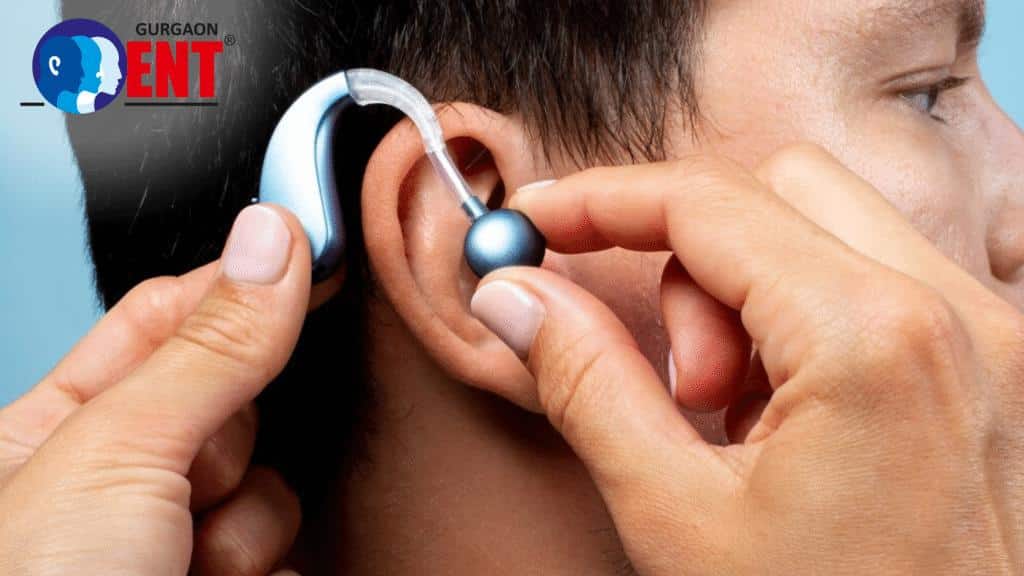
Let me strip the jargon down so bare my own mother would nod along. The outside part of the implant, the bit that looks like a hearing aid, runs on a tiny set of instructions. Those instructions tell it what to do with the racket of the world. Should it treat the ceiling fan as noise and squash it? Should it lift a soft voice out of a monsoon downpour? The old rulebook was printed in stone. Today, the rulebook is written in wet ink. Engineers sitting somewhere far away can refine a chapter, and your device just downloads the new pages while you sleep.
Nothing inside your head gets touched. The surgery site stays quiet. But one morning, your ear simply handles the clatter of your own kitchen a little better. That’s not magic. That’s firmware.
I saw this play out with a retired teacher who visits us. She lives for her Thursday bhajan circle. For years, the harmonium and the singing blurred into one thick wall of sound. Then an update arrived — something called ForwardFocus. I’d read about it on Hearing Tracker, honestly just out of curiosity. It was designed to push background noise down aggressively and let speech poke through. She downloaded it at home with her nephew’s help. The next bhajan session, she told me later, she heard every verse like someone had cleaned a dusty window. Same device. No new surgery. Just a quiet little update that cost nothing extra.
So why does the surgeon still matter? A lot, actually
You could ask, if all this improvement happens over the air, why fuss over which Cochlear Implant Surgeon in Gurgaon you pick? Fair question. Here’s the part nobody talks about. For those future updates to really sing, the internal electrode needs to be placed inside the cochlea with a ridiculous amount of gentleness. I’m not being poetic. If I damage even a few microscopic hair cells during the insertion, certain future stimulation strategies won’t work. The firmware will arrive, but the ear won’t be able to use it fully. And the implant brand itself — some are built open, ready to receive updates for decades. Others lock you in. Choosing the right system on the operating table is a promise I make to a patient about the year 2035, not just the day of switch-on.
Wind, a mynah bird, and the small things
The big updates get the press. But the tiny ones, they change mornings. One of my patients, a retired bank manager, used to dread his evening walk. Any breeze across the processor microphone turned the whole world into angry fuzz. He’d just switch off and walk in silence. Then a minor patch dropped — honestly I barely noticed the release notes — that taught the processor to recognize wind patterns and cancel them instantly. He came by the clinic not for a mapping, just to tell me he’d heard a koel singing in a neem tree. He looked almost embarrassed by how much it meant. That’s the stuff I carry home.
For the parents who can’t sleep
I see so many young parents, tired and wide-eyed, terrified of making the wrong choice. “Will this implant be obsolete when my child is in tenth standard?” That question used to have a tough answer. Now I can say, the processor she wears at age three might still be getting fresh abilities when she’s a teenager. Better speech clarity, whatever wireless thing the future invents, maybe settings that automatically know she’s in a classroom versus a playground. A dad once let out a breath I think he’d been holding for two years when I explained that the device could grow alongside his daughter. Not replacing it every few years. Just… upgrading it.
How we do it at the clinic, no corporate nonsense
We don’t have some fancy protocol. Our audiology team watches for new firmware releases like they watch for good weather. When a solid one lands, someone sends a WhatsApp: “Good update, want to try it this week?” We back up the person’s map, hold their hand through the download if needed, and then just listen together. Sometimes it’s in the clinic. Sometimes over a video call with chai on both sides. It’s fifteen minutes of tinkering for something that lifts a person’s daily life.
Where this is heading, and I’m genuinely curious
I try not to hype things I can’t guarantee. But the research whispers are fascinating. Implants that might one day notice a fall and ping your son. Or processors that could quietly translate a foreign language right inside your ear. I don’t know the timeline. But I do know that if your implant foundation was laid with an open, upgradeable system in mind, you’ll just greet that future like a familiar friend, not a stranger.
If you have a question you’ve been carrying around, or if you’re the wife who’s exhausted from repeating herself, just walk into Gurgaon ENT Clinic one afternoon. We’ll sit along with Cochlear Implant Surgeon in Gurgaon. The coffee is questionable, but the conversation won’t be. We’ll talk about what you miss hearing, not about firmware. That’s where the upgrade actually begins in a very simple, very human moment between two people in a quiet room.